
THE ROTHS CHILD GIRAFFE/NUBIAN TYPE
The Rothschild’s giraffe, also known as the Baringo or Ugandan giraffe is a subspecies of the Northern giraffe. It was named after the London zoologist Lionel Water Rothschild who first described the subspecies in the early 1900s.
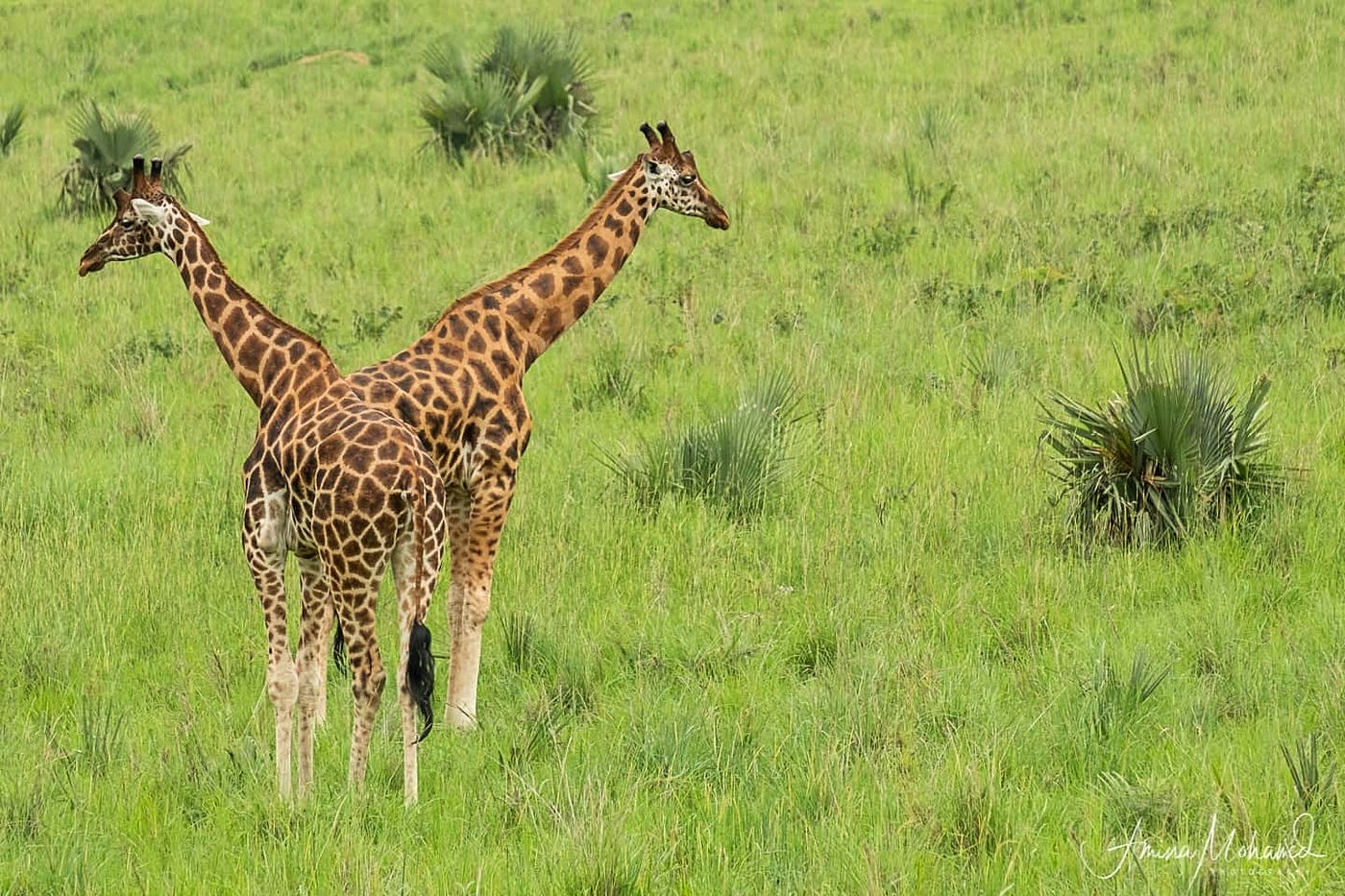
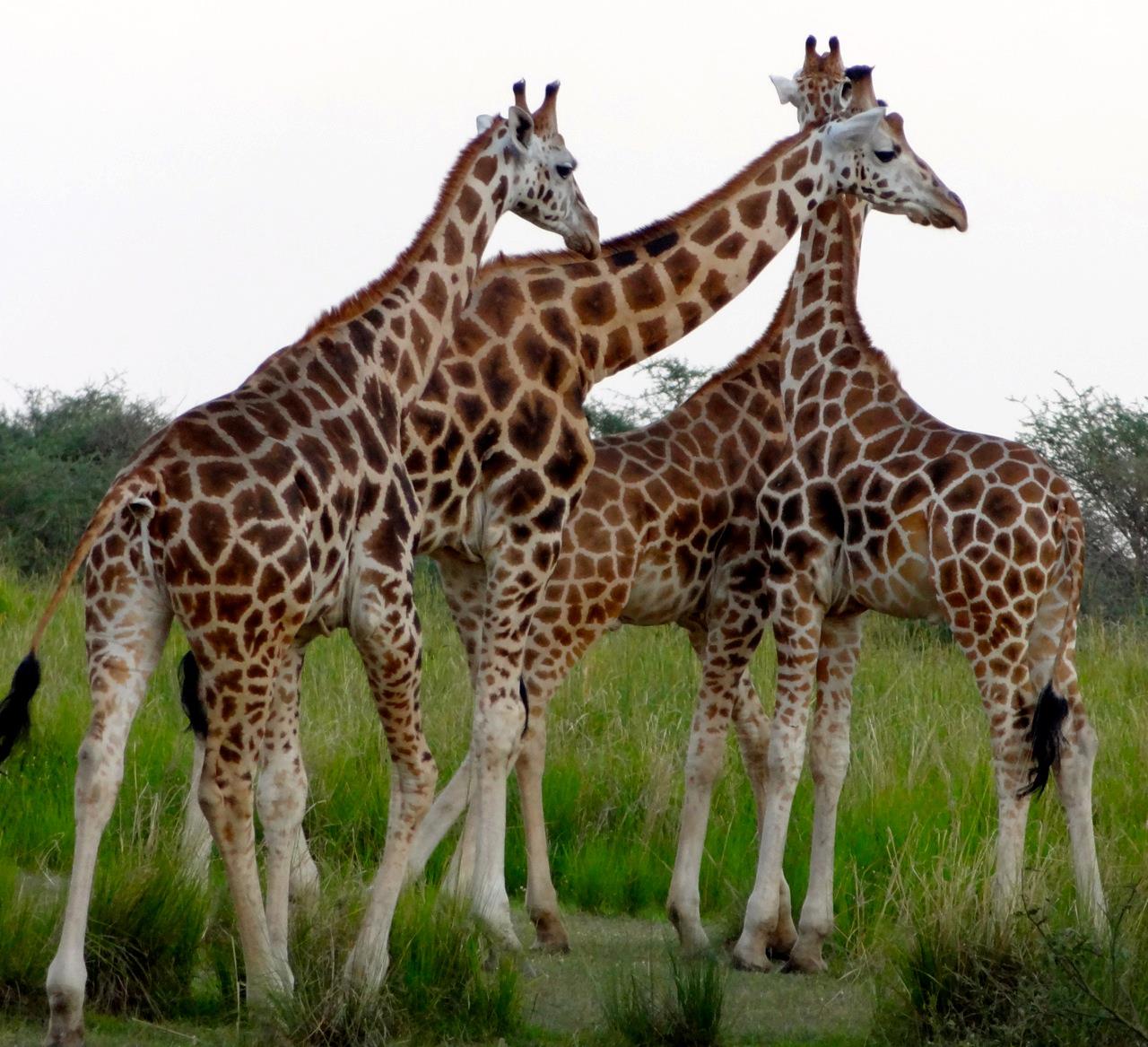
The giraffe is the world’s tallest land mammal and the Rothschild’s giraffe is one of the tallest subspecies, growing up to 6m tall. Its coloring is unique compared to other giraffes as their markings stop halfway down their legs.
The world’s tallest animal (up to 5.5m) towers above any animal and most plants and is one of the most exciting spectacles on the plains. Its long neck gives it a slightly ungainly appearance when it ambles; giraffes look decidedly absurd when they adopt a semi-crouching position to drink.
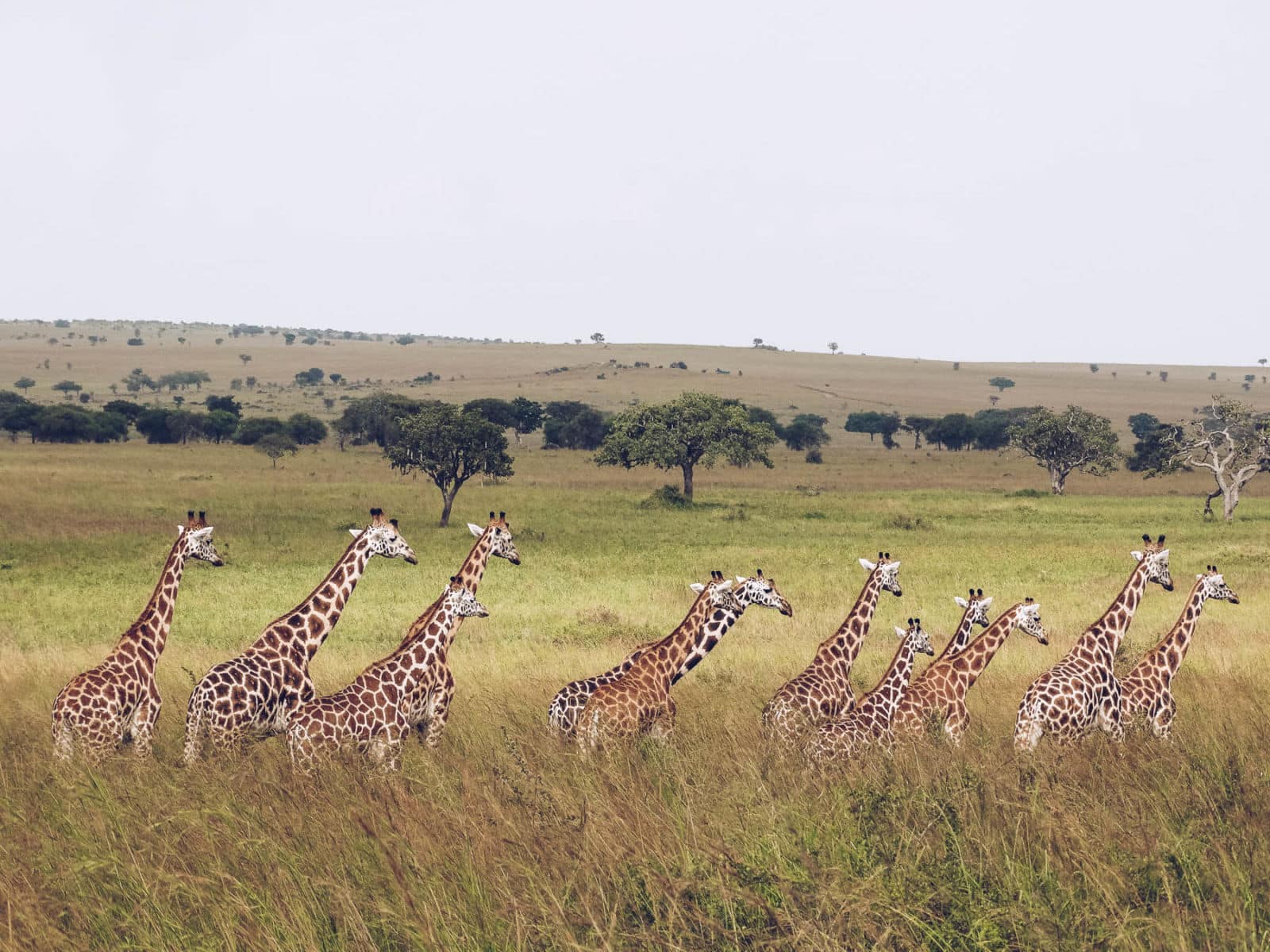
Giraffes live in small herds with males and females living separately outside of the breeding season. Females give birth to a single calf after a gestation period of around 15 months.
Lifespan
20 years
Population
The subspecies is classified as endangered. At present more than 1,550 Rothchild’s giraffes occur in Uganda. It is rare elsewhere in its former range but very common in the northern part of Murchison Falls National Park, Kidepo Valley, Lake Mburo, and very recently (2019) translocated to Pian Upe Game Reserve.
Habitat & Range
The Rothschild’s giraffe inhabits woodlands, savannahs and grasslands. It used to be abundant across Kenya, Uganda and Sudan but is now only found in small populations in western Kenya and northern Uganda. Around 60% of the population is found in Uganda.
Diet
Giraffes are herbivores. They have an impressive 45cm long tongue which, together with their long neck, helps them to reach and pull down the branches of tall trees. Their diet includes leaves, stems flowers and fruit. Males can eat up to 130kg of leaves in a day.
Male giraffes typically feed with their head and neck utterly outstretched to the shoots, and their fodder is from the underside of the high canopy.
Female giraffes feed at body and knee height, feeding on the crown of lower trees or shrubs, and are particularly selective when feeding. They choose foliage with the highest nutritional value.
Threats
Habitat loss – deforestation, land use conversion (mainly for agriculture), human population growth
Poaching – illegal hunting for meat and hide.
Conservation
Conservation measures include habitat protection, law enforcement and community-based conservation initiatives. Tusk has helped reintroduce them to parts of their former range in Kenya and provides support to our project partner, Uganda Conservation Foundation, in its efforts to restore the habitat and wildlife in Murchison Falls National Park, home to a large population of around 900 Rothschild’s giraffes.
Communication
Rothschild’s Giraffe is rarely heard and is usually considered a silent mammal.
Giraffes communicate with one another by infrasonic sound, though they sometimes vocalize to one another by grunts or whistle-like cries. Some other communication sounds for giraffes are moaning, snoring, hissing, and flutelike sounds.
When alarmed, giraffe grunts or snort to warn neighboring giraffes of the danger, mother giraffes can whistle to their young calves and search for their lost young by making bellowing calls. The calves return their mother’s calls by bleating or mewing.
While courting an oestrous cow, male giraffes may cough raucously.
Rothschild’s Giraffe vision relies mainly on their height, allowing giraffes continual visual contact while at great distances from their herd. The acute eyesight of giraffes can spot predators at a distance to prepare to defend themselves by kicking.
Individuals within a herd may scatter widely across the grassland searching for good food or drink and only cluster together at good food trees or if threatened.
Best national parks to see Rothschild giraffes in Uganda.
Murchison Falls National Park
The most ideal destination in Uganda to see the Rothschild’s giraffe is Murchison Falls National Park, which is home to 1,575 of them, representing over 50% of all Nubian giraffes in Africa. In addition, the park is home to over 451 different bird species, including the Shoebill stork, along with lions, elephants, buffaloes, hippos, and crocodiles in the Nile River. Game drives, boat trips down the Nile, and hot air balloon safaris are all options for seeing wildlife. The amazing hike to the top of the falls, though, is the highlight of any trip. There is a honeymoon trail south of the Nile River where you might see giraffes strolling past with a ranger.
Lake Mburo National Park
Located 234km (4 hours’ driving) south-west of the Entebbe airport and Kampala city, Lake Mburo National Park is one of the most easily accessed savannah parks in Uganda.
When going to Bwindi to undertake gorilla trekking, you can also take a rest from the long trip. There are 24 giraffes, and because there are no lions or elephants, it is safe for guests to wander into the African bush with a ranger.
Biking is an additional option for viewing animals in Lake Mburo. Zebra and impalas are two of the 69 mammal species that can be found only here throughout all the safari destinations in the western region of Uganda.
Kidepo Valley National Park
Kidepo is situated 700km (11-hour drive) northeast of Kampala capital city. You can get there quickly by air with a chartered flight from Entebbe International Airport. Once there, you will be in Africa’s most picturesque park according to CNN Africa.
The huge Narus valley is flanked by dry volcanic mountain ranges including Mount Murongole inhabited by IK Uganda’s smallest tribe. They are regarded as minority by the Karamojong cattle warriors whom you can visit on your trip to Kidepo.
The seasonal swamps and permanent water in the valley give life to 77 mammal species. These are tree-climbing lions, leopards,
Rothschild’s giraffe, elephants, buffaloes of which a single herd of over 4000 buffaloes is prominent. There are over 476 species of birds of which some are endemic to the Karamoja region including the Karamoja Apalis and the ostrich.
Given that the area’s semi-arid vegetation, some of the animals in Kidepo are difficult to find in other parks. These include cheetahs, ostrich, Aard wolf, striped hyena, Bat-eared fox among others.
Conclusion
Visitors eager to see Rothschild giraffes can do so during a wildlife viewing safari in Uganda, Kenya or Rwanda.