
Mabamba Swamp: A Bird-Lovers Paradise
This papyrus swamp is characterized by small channels of marsh-filled water and lagoons and is located about 57km from Kampala city and an hour’s drive from Entebbe city. Lying on the edge of Lake Victoria, Mabamba is a massive 16,500 hectares and is part of the list of Wetlands of International Importance as chosen by the Ramsar Convention.
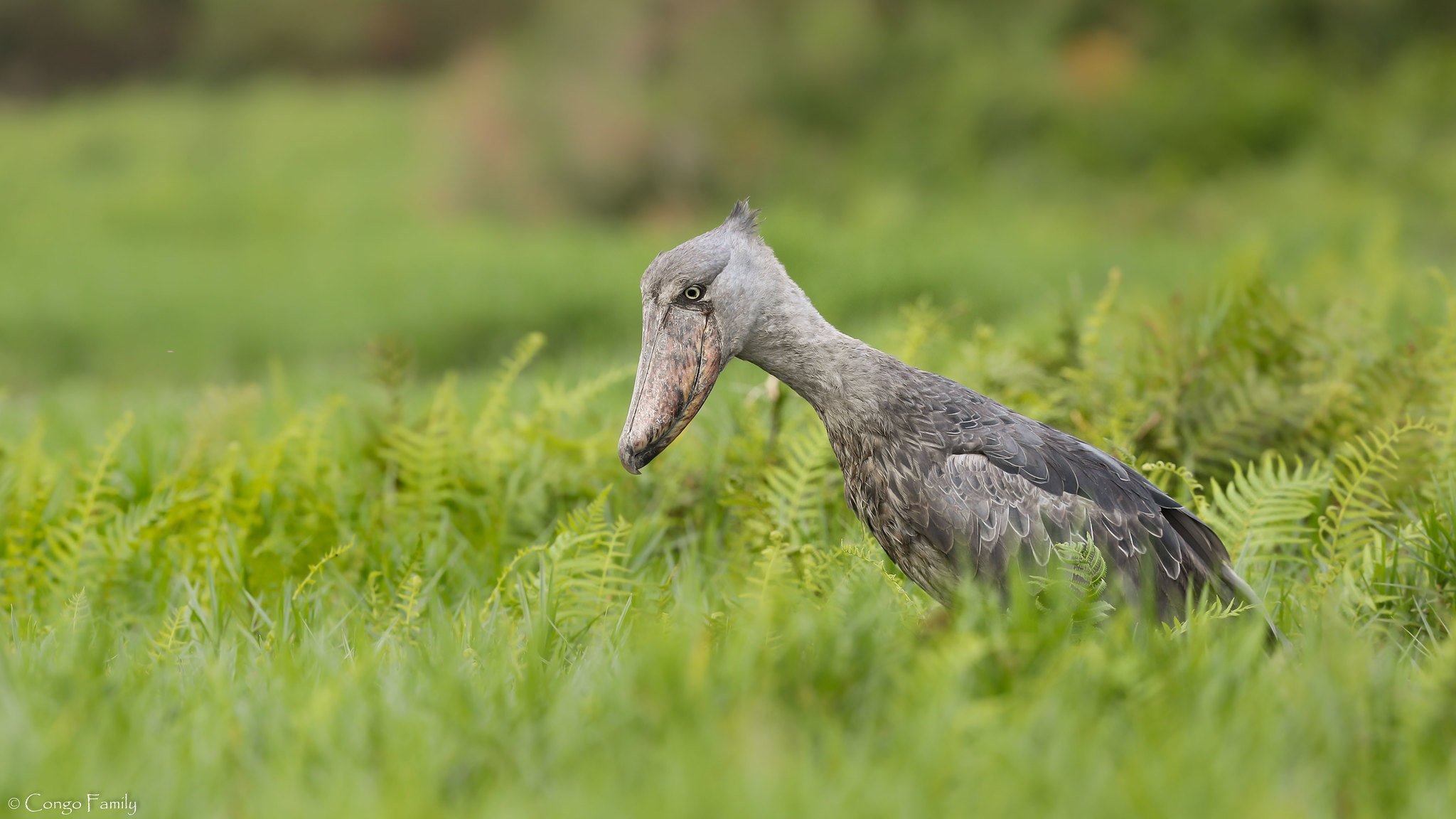
Mabamba swamp is a Ramsar site and Important Bird Area (IBA). The wetland hosts over 300 bird species that include many globally threatened species, 7 of Uganda’s 12 Lake Victoria biome restricted species (notable is the Papyrus Gonolek) and plenty of wetland specialties. The wetland also hosts huge flocks of Paleartic migrants every year from October to March.
Birding in Mabamba swamp is done from a motorized wooden boat by riding through a maze of trails cutting through the thick marshes.
Location of Mabamba Bay
Mabamba Bay is a wetland on the edge of Lake Victoria, northwest of the Entebbe peninsula. Mabamba is one of Uganda’s 33 Important Bird Areas and since 2006 a Ramsar-listed wetland of international importance. Key protected bird species in Mabamba are the shoebill, the blue swallow and the papyrus gonolek.
Attractions in Mabamba Swamp.
The Shoebill, the most sought-after bird by Ugandan birdwatchers, is a major attraction at Mabamba Wetland. Intriguing visitors who are not interested in bird watching also include the Shoebill on their list of wildlife because of its unusual appearance and enormous size. There are only a few locations in Uganda where one can find the uncommon bird, but Mabamba Swamp is the most dependable and easily accessible location, offering the best odds of sighting the Shoebill in Uganda and possibly all of Africa.
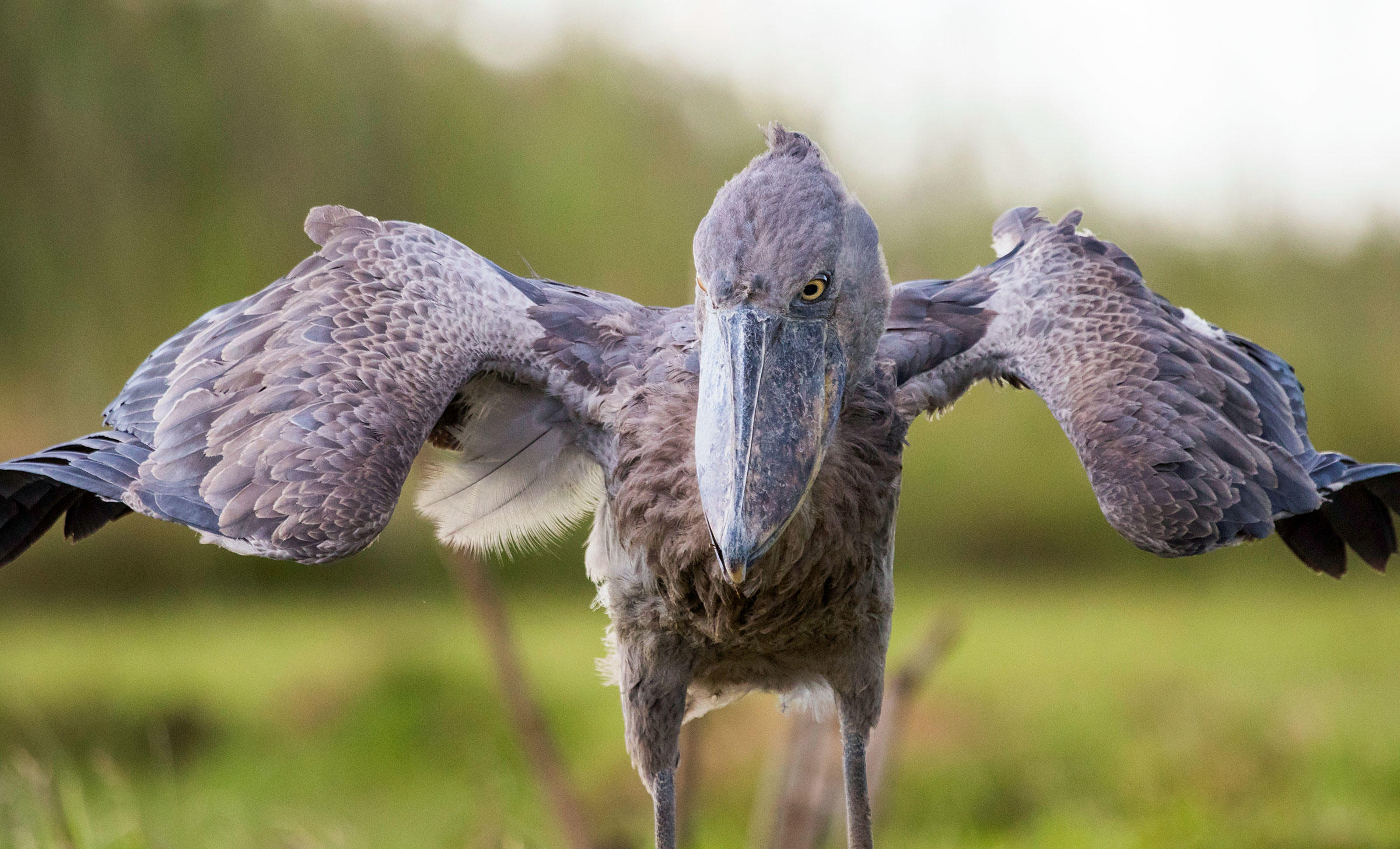
The native term for lungfish, “mamba,” is abundant in Mabamba Swamp and is the preferred meal of Shoebills. Lungfish and Shoebill are in rivalry with each other since lungfish is highly sought for by the local fisherman. The local Shoebill, known as “Boolwe,” is associated with poor fishing luck, according to a long-standing tradition among the fisherman. However, this makes sense because the Shoebill is a predator of lungfish, and fish will hide in areas where the Shoebill is present. When one went out to fish in the wetland, it was considered unlucky for the fishermen to sight a Shoebill. They murdered and hunted Shoebills, which caused a decrease in population and nearly caused their extinction in the marsh.
Designating the wetland a Ramsar site in 2006 provided some protection to the Shoebill. However, bird watching on the wetland brought about enlightenment to the fishermen and community. The fishermen rent out their boats to birdwatchers and make a lot of money, and even some fishermen have been trained in birding and guiding.
The fishermen now protect the Shoebill, so that when they set out to fish and see a Shoebill, they do not move too close not to disturb it and will gladly inform the tourists of where to see it. There is about 12 Shoebills said to be resident in Mabamba wetland.
Best time to visit Mabamba Bay
The best time to see the Shoebill in Mabamba swamp is early morning, say 7am, before there is more activity on the wetland BUT also by this time the Shoebill is hunting for lunch fish which it does by standing in one place for a long time or even hours looking out in the water waiting for fish to cross so it scoops it with the big strong shoe-like bill that breaks the fish instant

How to get to Mabamba Swamp Bay
Mabamba Swamp can be reached by a number of routes. From Kampala or Entebbe, the easiest route is via the Nakiwogo landing site in Entebbe where you take a 10-minute ferry crossing to Kasanje landing and from there drive for about 20 minutes to Mabamba passing through cultivations and open fields that will provide plenty of garden birds.
Shoebill Stork Tours in Mabamba Swamp
The Shoebill stork is the most sought out bird in Uganda. It is a shy and intriguing bird with a mysterious physical appearance. Its most striking feature is a massive, uneven, large and yellow colored bill. Shoebill Storks are considered by some to be an ugly bird which looks like a creature straight out of the Jurassic age. Regardless of what some think, tourists and seasoned birders find them very fascinating. Hundreds of birders flock to Uganda purposely to see these large birds.
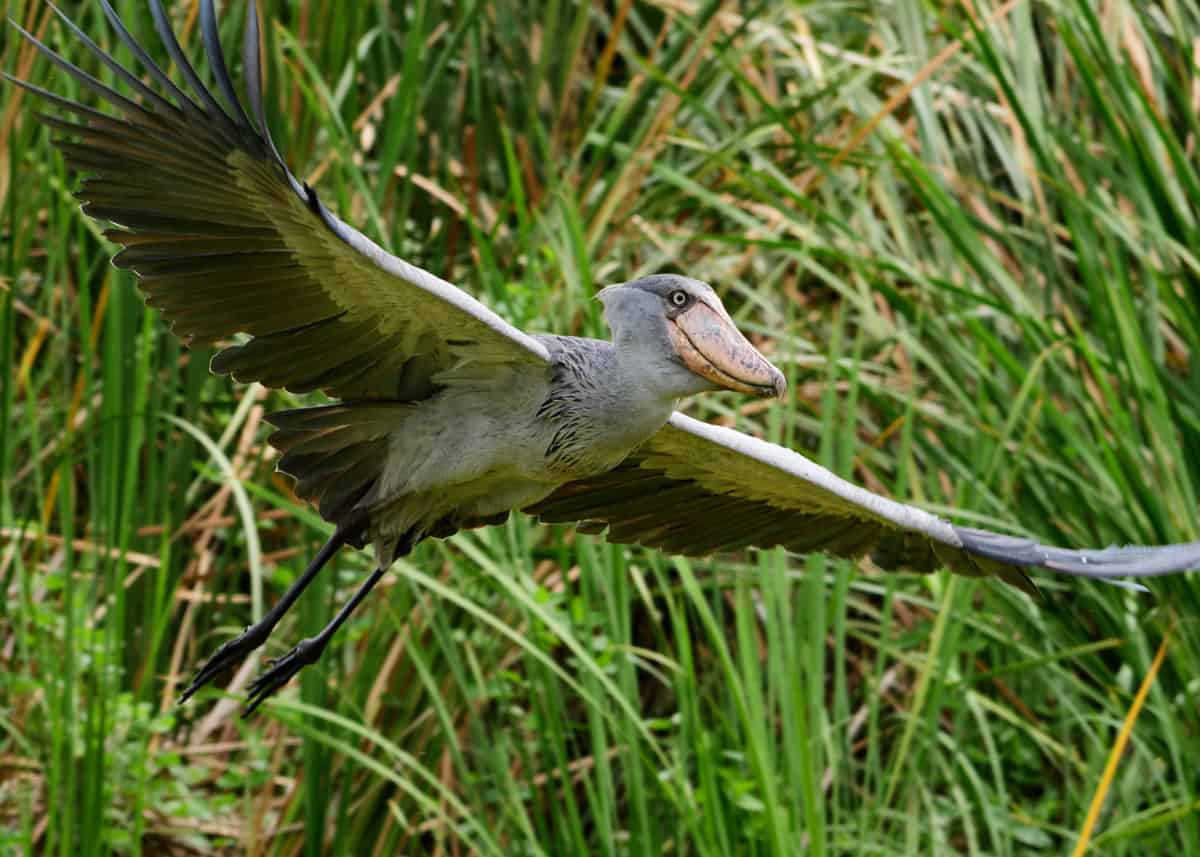
Mabamba Bay Wetland Shoebills are found in the papyrus swamps of Sub-Saharan Africa including DR Congo, Zambia, Tanzania, Uganda and Sudan. Uganda has about 1000 individuals.
Shoebill Storks love Lungfish but will also feed on smaller water birds, water snakes, frogs, lizards, Turtles, Crocodiles (young), Snails and Rodents and their favorite food in Mabamba is Lungfish.
Conclusion
In summary, the conservation of the Mabamba Bay Wetland is crucial, not only for the survival of the endangered Shoebill but also for the welfare of the local community. The success of the conservation efforts hinges on the involvement of the local community and the promotion of sustainable tourism. Nevertheless, there is still much work to be done to address the challenges of poaching, burning, invasive species, and habitat degradation. With the support of the government, NGOs, and the community, the conservation of the wetland and its biodiversity is achievable.